India’s automotive landscape saw two major developments today, both involving global legacy manufacturers, but the reactions on the ground have been mixed, even underwhelming in parts.
Toyota Enters the Indian EV Space with Urban Cruiser Ebella
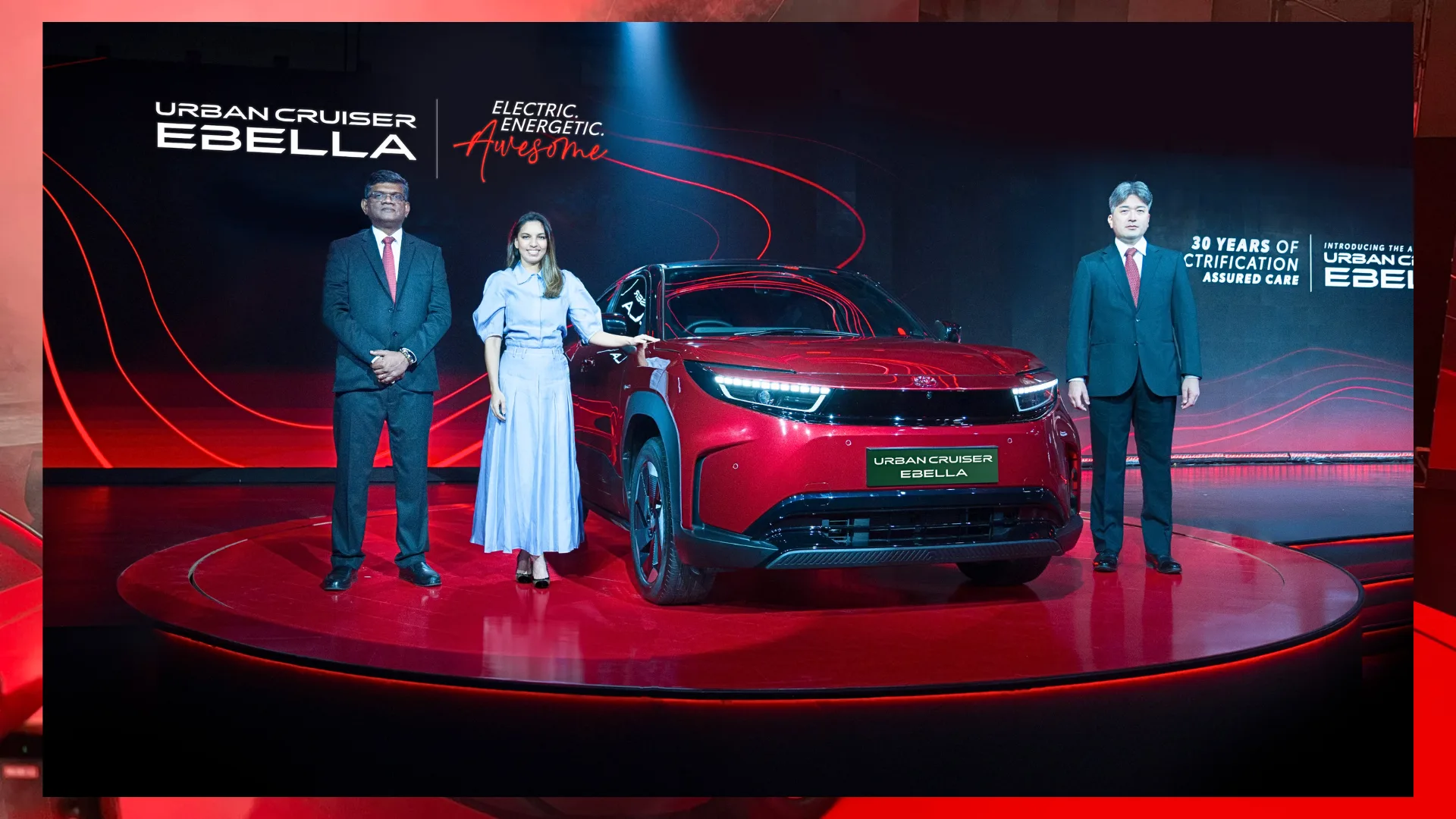
Toyota Kirloskar Motor officially unveiled the Urban Cruiser Ebella EV, marking the brand’s first fully electric vehicle for the Indian market.
Positioned as a mid-size electric SUV, the Ebella represents Toyota’s long-anticipated entry into India’s fast-growing EV segment.
The Urban Cruiser Ebella is based on a familiar platform and is widely viewed as a rebadged electric SUV developed under Toyota’s partnership framework.
While the design and fundamentals are not entirely new, Toyota has attempted to strengthen the offering through ownership-focused initiatives rather than radical product differentiation.
Key highlights include:
-
Two battery pack options, with a claimed driving range of over 500 km on the larger battery
-
Fast-charging capability and modern connected-car features
-
A strong safety package with multiple airbags and advanced driver-assistance systems
-
60% assured buyback value after three years, aimed at reducing resale anxiety
-
Battery-as-a-Service (BaaS) option to lower upfront ownership costs
Despite these measures, early reactions remain divided. While Toyota’s reliability credentials and buyback assurance are appreciated, some buyers and enthusiasts were expecting a more distinct EV identity rather than a familiar product with a new badge.
The launch, however, clearly signals Toyota’s shift from a hybrid-only narrative toward a broader electric strategy in India.
Skoda’s Update Draws Attention but Misses Key Expectations
On the same day, Skoda India revealed updates to its compact SUV lineup, with the spotlight largely falling on the Kylaq rather than the Kushaq. While several feature additions were introduced, the update has left many observers unconvinced.
New elements such as a panoramic sunroof and illuminated interior features add showroom appeal, but critical omissions stand out:
-
No ADAS technology
-
No 360-degree camera, increasingly expected in the segment
-
Persistent rear space limitations
-
Continued use of design elements that many owners have long criticised
While the updates will appeal to a section of buyers, they do little to address the core functional concerns that have been raised consistently since the model’s launch. The result is an upgrade that feels cosmetic rather than transformative.
A Day That Reflects a Larger Shift
Today’s developments underline a broader trend in the Indian auto market. Customer expectations are evolving rapidly, shaped by new-age EV players and feature-rich offerings.
Incremental updates and safe product strategies are no longer enough.
Toyota’s Urban Cruiser Ebella EV may not be revolutionary, but it represents a strategic turning point for the brand.
Skoda’s refresh, on the other hand, highlights the growing risk legacy automakers face when updates fail to align with real-world user feedback.
As competition intensifies, the market will likely reward brands that move decisively—not just with headlines, but with solutions that genuinely address buyer needs.